
What Is Anglicanism? (Part 6)
The Candle of the Lord

This one is for anyone who has ever carried a question to church and left it at the door, afraid that if they really pulled on it, the whole thing might come apart.
Here’s Episode 6.
The Last Honest Man
Sometime around 1862, in the colony of Natal, in what is now South Africa, an English bishop was sitting at a table doing the thing he loved most, which was translating the Bible into Zulu. His name was John William Colenso. He was a Cornishman, the son of a man ruined when his tin mine flooded, and he had clawed his way to Cambridge on sheer brilliance at mathematics. Now he was a bishop on the far side of the world, and he had thrown himself into the Zulu language with everything he had, building a grammar, a dictionary, a translation, because he wanted these people to have the Scriptures in their own tongue.
He did not do it alone. He worked with Zulu men who knew the language from the inside, and one of them, a man named William Ngidi, took the work with deadly seriousness. And one day Ngidi asked the bishop a question. They had reached the story of the Flood, Noah and the ark and every animal on earth and forty days of rain drowning the world, and Ngidi wanted to know, simply and directly: did it happen, all of it, the way the page says?
Now, Colenso was a mathematician. He had already been quietly running the numbers in these old books, the dates and the head counts, the population of the camp in the wilderness, the livestock, the arithmetic of the whole thing, and he had come to believe, the way a mathematician comes to believe a thing, that some of it could not be read as flat, literal history. And here was this man looking at him, waiting, a man he was trying to bring to Christ. And Colenso found that he could not lie to him. He would not buy the man’s faith with a falsehood. So he told the truth as he saw it, and that single honest answer cracked his whole world open. What he had run into was not whether the Bible is true. It was what kind of true it is. And that question, faithful Christians have always answered in very different ways.
He went on to write a book that brought all his mathematician’s rigor to those first books of the Bible, asking the hard questions about them out loud instead of pretending they were not there. It caused an uproar that followed him the rest of his life. And the very same honesty, the same refusal to look away from what was true, made him do something else, something most of his fellow Englishmen would not do. He took the side of the Zulu people against the empire, against the colonists, against the soldiers, defending them in the press and before the British public right through the brutal wars of those years. The Zulu gave him a name. They called him Sobantu, father of the people. And long after he was gone, they were said to remember him as the last honest white man.
That man is our way into the part of this story almost nobody loves. Today we meet the third great party of this church, the one with the worst reputation of them all. The Broad Church.
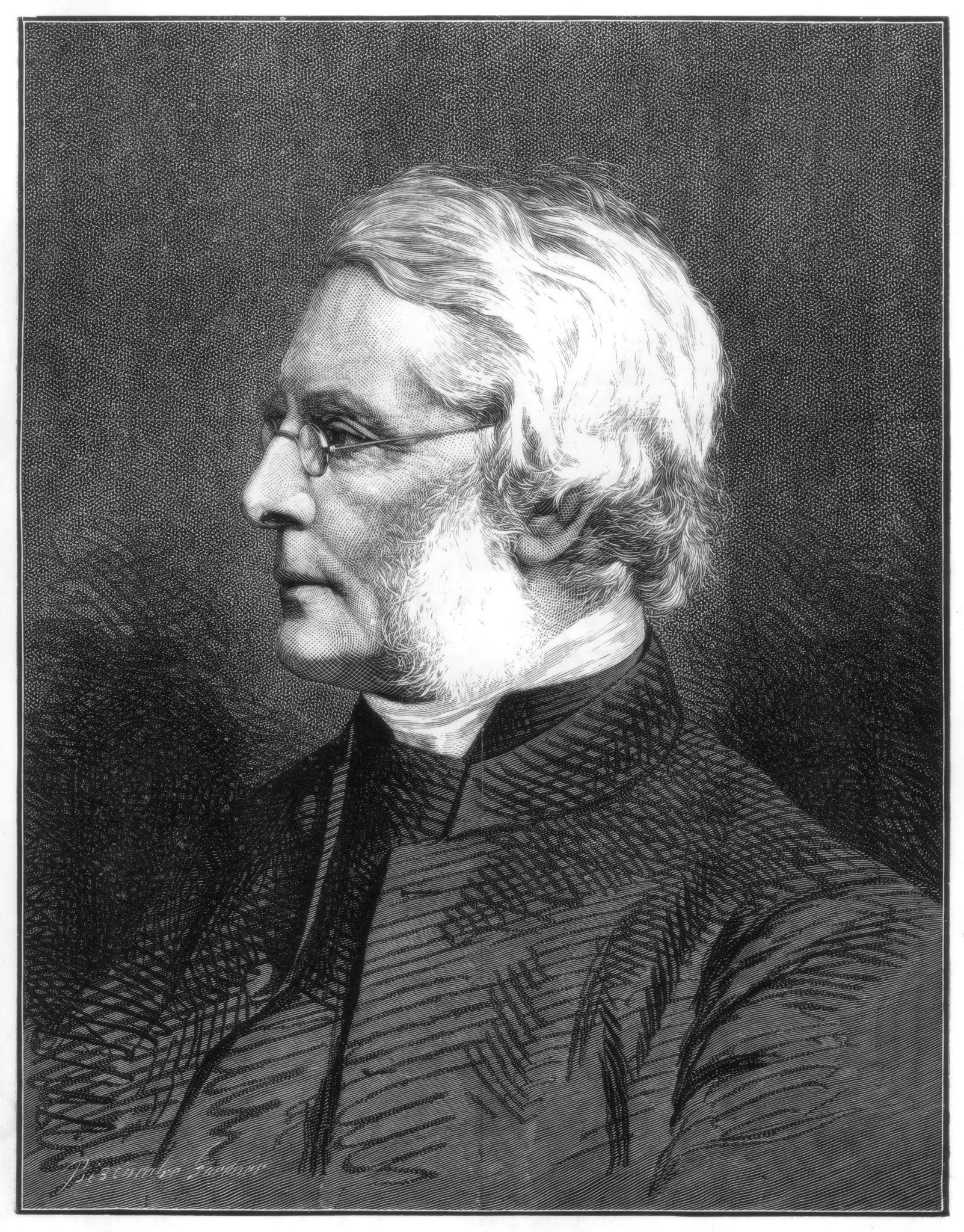
The Third Stream
Welcome back. We have spent the last two episodes watching two great revivals reach for the pulse of a living faith from opposite directions. The Evangelicals reached for it through the warmed heart, the personal experience of grace that poured out into the prisons and the fields and the fight against slavery. The Anglo-Catholics reached for it through the ancient roots, the recovery of beauty and sacrament and apostolic depth that carried the gospel down into the slums. Heart and roots.
There was a third party, and it is the one almost no one waves a flag for, because it is the one the other two were partly reacting against. People called it the Broad Church. The wide church. The party of reason, of moderation, of breadth, the people who wanted the tent kept as large as it could possibly be and the hard edges sanded off.
And this is the episode where I cannot pretend the danger away. Breadth can be a living faith. And breadth can be the deadest thing in the room, the polite, respectable religion that asks nothing and costs nothing and learns to shrug at everything, until it believes little and does less. Both of those are called Broad Church. So the question we are going to live inside for the rest of this episode is the sharpest one in the series. When is breadth a living faith, reaching for the pulse, and when is it just the old deadness wearing a cleverer coat?
Because this party, when it was alive, brought a gift the church cannot do without. The Evangelicals gave the church its heart back. The Anglo-Catholics gave it its roots back. And the Broad Church gave it permission to keep its mind, the conviction that an honest question is not a threat to God but an offering to him. That was the gift, and it was the most dangerous of the three, because a mind free to question is free to wander.
And those three are not a tidy carve-up, the heart over here, the roots over there, the mind off in its corner. That is the lie the whole series has been fighting. The Evangelicals had their theologians and the Anglo-Catholics their preachers and Cranmer himself loved the ancient Fathers. Heart and roots and mind are not three different faiths. They are three things the one living faith keeps reaching for, and every party wanted all three.
The Candle of the Lord
Start with the instinct underneath it, because the instinct is old and deeply Christian, and not the modern surrender people assume.
There is a line in the book of Proverbs that a group of gentle, brilliant Cambridge thinkers in the 1600s loved so much they made it almost a motto. “The spirit of man is the candle of the Lord.” Your mind, your reason, the light by which you think, is not the enemy of God and not a threat to faith. It is a candle that God himself lit. Think of a child handed a candle and sent to find something in a dark house. The one who lit it is not afraid of what she will see. He gave her the light precisely so she could find her way. To think hard and honestly, on that view, is not to walk away from God. It is to use something he gave you, for exactly this.
And there is an older conviction underneath that one, going back to Augustine. All truth is God’s truth. If a thing is true, it is his, wherever you find it, because he is the source of all of it. He did not bury traps in the world to catch the curious. So honest inquiry, done humbly and under him, is never finally a threat to faith, because it cannot turn up a truth that does not already belong to him. You can follow the evidence. You do not have to be afraid of what you find.
So when the Victorians who carried this said do not be afraid of the truth, they were not being faithless. They thought they were being faithful. They thought a God of truth could not possibly be honored by people closing their eyes. That is the living version. There was also a dead version, an older, sleepy religion that used the word reasonable to mean lukewarm and had quietly let the fire go out generations before. That is the foil this whole series keeps fighting, and it is not what we are here for. The living Broad Church is the candle, lit on purpose, held up to honest questions on the conviction that God is not afraid of them either. Let me show you what it looked like in the people who carried it, and the storm they walked into.
Maurice and the Glue
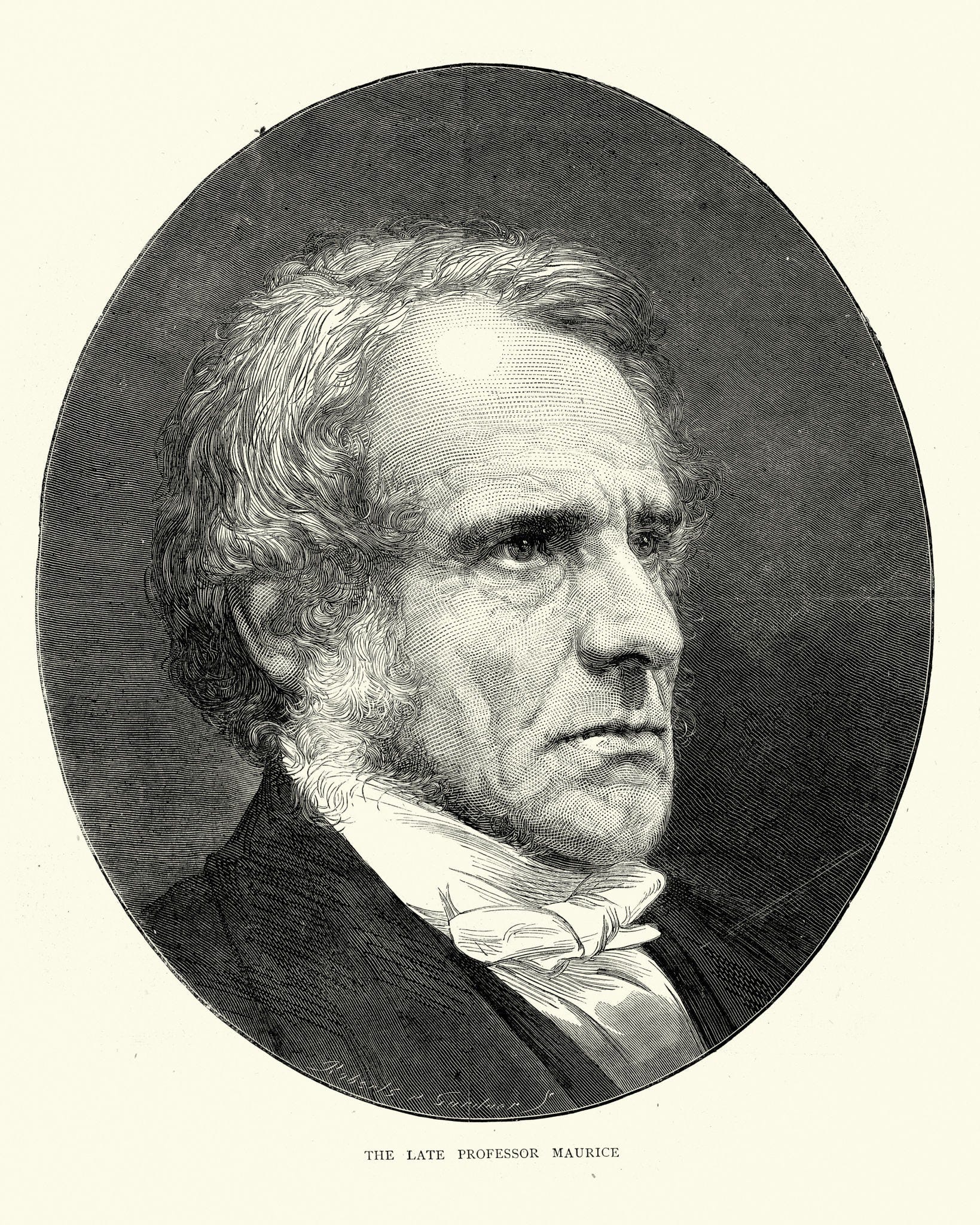
We have to go back a few decades, because the man who saw all of this coming was working before Colenso ever opened Genesis in Zulu. The first and the greatest of them was a theologian named Frederick Denison Maurice, and to understand him you have to start where he started, which was in a house at war over religion.
His father was a minister, and while Frederick was still a boy, his family came apart over doctrine, slowly and painfully, right around him. His mother and his sisters, one by one, broke with the father’s faith and went off in different directions, one into a stern Calvinism, another into the Baptist chapels, writing each other anguished letters about who was saved and who was wrong. Not doctrine itself, but doctrine made into a wall between people who loved each other. That was the air the boy breathed.
And it marked him for life. He came out of that house with one conviction he would spend forty years working out. A church that holds together only because everyone agrees is standing on nothing, because the day the agreement cracks, it comes apart, exactly like his family.
So Maurice became the great theologian of unity. In his major book, written in 1838, called The Kingdom of Christ, he argued that the church is not a club of people who happen to agree on everything. It is a divine society, something God has already made, and it is held together not by everyone thinking alike, but by real, solid, given things. The water of baptism. The words of the creed. The Scriptures. The bread and wine of communion. The prayer book in your hands. These were not, for Maurice, trophies for one party to win off another. They were the things God had put in the house for everyone, holding the family together underneath all its fighting. And the creed is right there in the list, so this was never a faith without content. The belief is real. It is given to you, not voted on.
This is the floor under all of it, the same floor this whole series stands on. The prayer that Cranmer gave us to pray. The preaching that breaks the word open. The theology that thinks it all through. Every Anglican holds those, low and high and broad alike. They are not what divides us. They are what we are standing on while we argue. And this is the Broad Church’s own gift to that floor. They fought to keep the church wide enough that a man like Ngidi could bring his hardest question, ask it out loud, and still belong, because the question was never an intruder. It was one more thing the living faith reaches with.
Christ, Maurice said, does not belong only to the people who have the right views about him. He is already the head of the whole human race, every last person, whether they know it yet or not. And if that is true, then the unity of the church is not something we build by enforcing sameness. It is already real in Christ, and our fighting only buries it. That is what makes the table long enough to sit at with someone you are sure is wrong.
And that conviction had hands and feet. It was 1848. Revolutions were exploding across Europe, crowds of desperate English working men were marching for the vote and for bread, and most of the respectable church looked at those crowds and saw only a threat to property. Maurice did something else. With his friends, the novelist Charles Kingsley and a layman named John Ludlow, he launched a movement they deliberately, provocatively called Christian Socialism. They were not Marxists, and the label means less than what was under it. But they were convinced of something the gospel will not let go of: that God is not indifferent when a man is ground down, and that you cannot love God and shrug at your neighbor’s suffering.
Maurice put his own hands to it. He helped found a college for working men, in the evenings, so that laborers who had been given nothing could learn. He did not do it to earn anything. He did it because he was sure Christ already claimed those men, and the church had not yet treated them like it.
His convictions cost him more than once. The heaviest came at King’s College London, where Maurice wrote an essay wrestling with the doctrine of hell, and he could not bring himself to affirm it as endless conscious torment. He thought the word eternal in the Bible pointed more to a quality of life, knowing God or not knowing him, than to a clock that never stops ticking. The college decided that was too dangerous, and they dismissed him from his chair for it.
Now, you can question that picture of hell and lose nothing of the gospel. Faithful Christians always have, from the Greek Fathers of the early church to modern evangelicals like John Stott. That is not the cost I mean. The cost is subtler, and it is downstream of something else in him. Because here I owe you the truth, Maurice is the place this whole stream begins to lean toward something we should watch. What drove him underneath was that he could not stand the picture of God as a petty creditor, a deity who hates you until the debt is paid and has to be talked down from his anger before he will love his own children. And he was right. A religion of fear, where you lie awake wondering if the books are finally balanced, is not the good news of grace, and his recoil from it came from something true and even precious in him.
But in recoiling from the caricature, he let go of more than he meant to. The judgment of God went quiet, evil stopped looking so serious, and the human predicament stopped looking quite so dire. And grace is only amazing if there is really something to be saved from. The cross is not God being talked out of his anger. It is God himself, at terrible cost, dealing with something real, a real evil, a real wrong, a real death, the thing that actually had hold of us. It is like the teacher who would rather be liked than respected, the fun one, the cool one, who sees a kid getting picked on and smooths it over with a joke instead of stopping it, because stepping in would cost him the room. He is not being kind. He is failing the kid getting picked on. A God who shrugs at evil is not good, and the cross is God refusing to shrug.
So Maurice is not our villain and not simply our hero. He held the love of God with both hands and, in the same motion, let the gravity of evil slip, and grace needs that gravity to cost anything. Both of those are true at once. Hold that, because it is the shape of the whole stream, and we are going to see it again, harder, in a better man than most of us will ever be.
The Preacher to the Doubting
There were preachers in this stream too, because by now you know there always are. The one people still remember is Frederick Robertson, and in six short years in a Brighton chapel, before he burned out and died at thirty-seven, he became by the judgment of the people who heard him the equal of any preacher his century produced. What made him matter was who he was preaching to. Brighton was full of thoughtful, anxious, modern people whose certainties were cracking under exactly the pressures this episode is about, and Robertson knew that ground from the inside, because he had nearly lost his own faith walking it. What he carried out of the valley, and preached to the end, was this. You do not think your way back to faith by settling every question first. You take the next plain duty in front of you, the truth you do already know, the kindness you can do today, and you do it, and the light comes as you walk. Faith seeking understanding. For a person paralyzed by doubt, that is not a cheap answer. It is a lifeline. He was steadying one anxious soul at a time, in a chapel by the sea. What was coming would not stay so quiet.
Honesty About the Book
The storm all of this had been building toward finally broke, and it broke over the Bible.
In 1860, seven writers gathered the new learning between two covers in a book called Essays and Reviews. They had been reading the Scriptures the way the German scholars had taught a generation to read them, closely and historically, asking with new tools and new rigor who wrote these books, and when, and how they came together. They read the opening chapters of Genesis not as a modern science textbook but as something older and deeper, ancient writing whose whole purpose is to tell us the truth about God and the world. Who made it. Whose it is. What we are.
One of the seven would go on to become Archbishop of Canterbury. Another was Benjamin Jowett, the most famous classical scholar in Oxford. And Jowett wrote the sentence that made the ground move. The Bible, he said, should be read like any other book.
Sit in how that lands. Because it can land like the floor giving way. Read it like any other book, and you start pulling threads. The flood did not happen the way the page says. Then what about the rest of it. If the first pages are not flat history, where does it stop. The miracles. The empty tomb. You can feel the whole garment starting to come loose in your hands, one thread and then another, until you are standing there holding a pile of string and wondering if any of it was ever true. That fear is not stupid. It is the most serious fear in this whole story, and I am not going to wave it away, because plenty of people pulled exactly that thread and watched the whole thing unravel.
But here is what almost nobody in 1860 could hear, and it was sitting in Jowett’s own sentence the whole time. Because Jowett did not stop where the controversy stopped. He wrote the other half of it, in the same breath. Read the Bible like any other book, he said, and it will still remain unlike any other book. That is the turn. You can learn the languages, study the history, ask when it was written and by whom, notice the places where one hand stops and another takes over, do every honest thing the scholars do, and find that it is still not like anything else, that through these utterly human words God himself is actually speaking, that it is inspired, the living word, able to search you and turn you inside out.
You do not have to choose. You can take the history with total seriousness and take the inspiration with total seriousness, both, at the same time. That is not a fudge or a compromise. It is where the richest Christian scholarship has lived ever since, and where a great many faithful, brilliant people live right now.
The cheap version, the one a lot of us soaked up without quite being taught it, and that plenty of people were happy to preach, keeps only the first half. It hears like any other book and quietly drops the rest, until the Bible is just an old human document with some lovely bits, interesting, outgrown, safely set on the shelf. I want to say this plainly, especially if that is roughly where you have landed: that is not the sophisticated view. It is not the cutting edge of anything. It is the shallow end of the pool. The serious water is deeper, and stranger, and far more alive, and it is wide enough to hold all your hardest questions and the inspiration of Scripture at once.
But I have to be as honest about that book as Colenso was about Genesis, because the same volume that held Jowett’s sentence held other things. One of the seven denied outright that a miracle could happen. Another stretched what a clergyman could put his name to until it nearly meant nothing at all. This was not the clean both-and, safe between two covers. It was the both-and and the draining-away, bound in the same book, published the same spring, tried in the same court. That is the whole stream in one book. The honest question and the honest loss, side by side, and no clean way to keep the first with no risk of the second. It is real, and it is not safe.
In 1860, though, the second half was lost in the noise. The Bible as a human book was all anyone heard, and much of the church, instead of holding up the half that was getting drowned out, simply panicked. This caused a greater uproar than Darwin had the year before. Two of the authors were dragged into the church courts and convicted of heresy, and then, on appeal, the highest court in the land overturned the convictions. Eleven thousand clergymen signed a declaration insisting that the whole of the Bible was the inspired word of God, true in every part as plain fact. They had fused two things that did not have to be fused, the inspiration of Scripture and a flat, literal reading of all of it, as if to hold the first you had to hold the second. And Colenso, our bishop from Natal, had walked into all of it years earlier and on the far side of the world, the same honesty, the same trial, and it had cost him more than any of them. We will come back to him, because his is the hardest and the truest case of all.
That is the road I have to show you now. Not the honest faith that holds both halves, but the other one, where the honesty is real and everything else quietly drains away.
The Tide Going Out
This is what it looks like when a faith keeps the honesty and lets everything else go.
There was a great headmaster named Thomas Arnold, an early broad churchman, a man of fierce moral seriousness who wanted a national church wide enough to hold the whole country.
And he had a son, Matthew Arnold, who became one of the most admired poets and critics of the age. And Matthew Arnold is one of the great emblems of what was happening to faith in Victorian England, because he kept almost everything his father had given him. He kept the moral seriousness. He kept the love of the church as a beautiful inheritance. He kept the ache, the longing, the high and solemn language. He kept everything except the faith itself, which went quietly out of him, and which he believed was going out of his whole century, like a tide pulling back off a beach.
He wrote it down, in a poem called Dover Beach, standing at a window listening to the sea drag back over the pebbles in the dark. The Sea of Faith, he wrote, was once at the full and lay around the earth like a bright girdle. But now, he says, he hears only its melancholy, long, withdrawing roar.
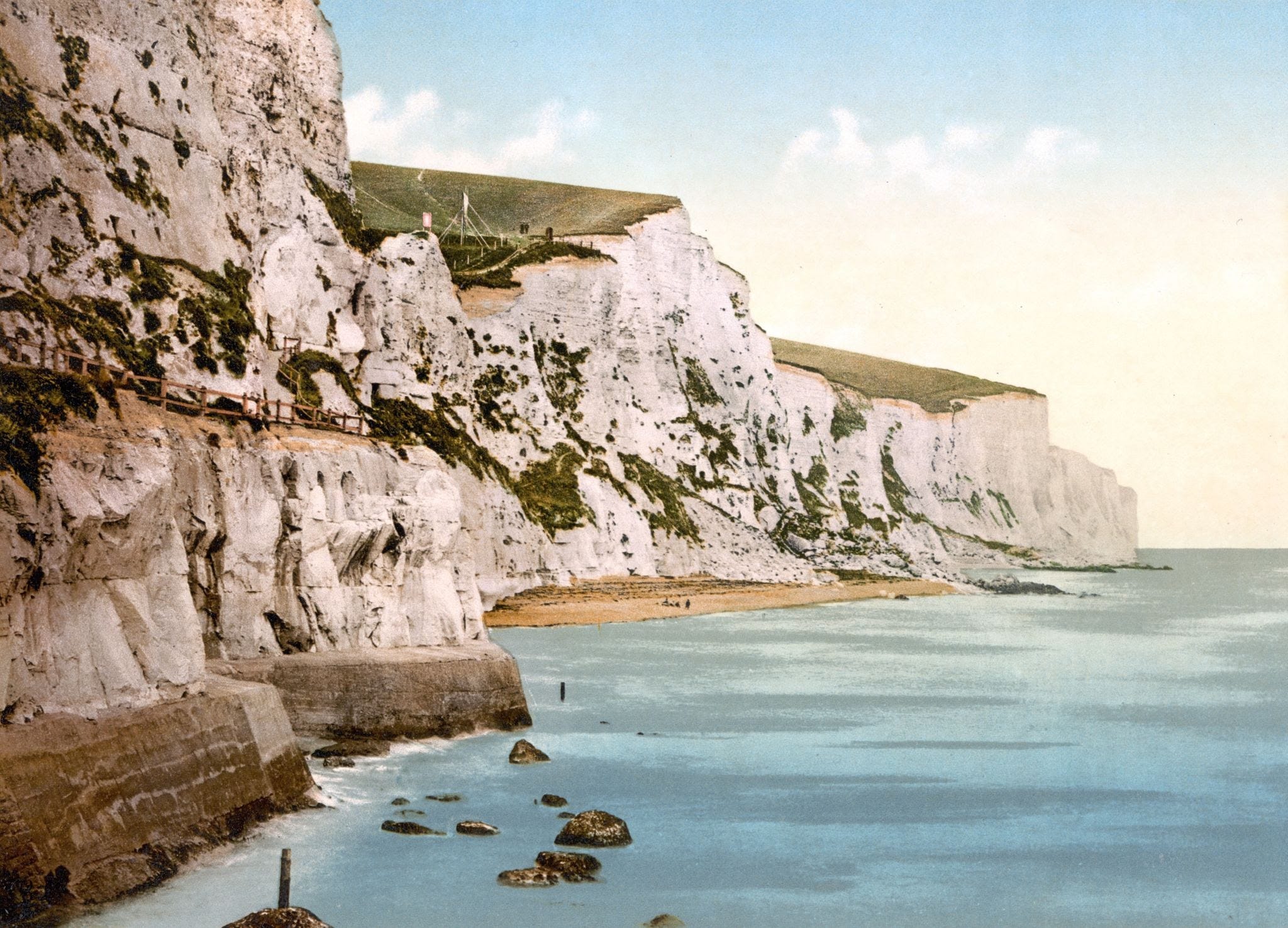
And here I want to be careful, because Arnold is the tragedy of it, not the worst of it. He wanted it to be true. He mourned what was leaving. There is something almost holy in a man who has lost the faith and still aches after it, and the morals he kept were running, though he may not have known it, on the borrowed light of a faith that was draining away.
The dead thing is the step past him, when even the ache goes. Let the tide all the way out and what is left is not even sad. It keeps its seat and its opinions and its taste, it stops praying, it looks at suffering it could do something about and calls the looking-away reasonable. Arnold at least mourned. The dead thing does not even mourn. It shrugs. That is breadth after the fire has gone out. It is the thing this stream had to keep choosing against.
So which was it, this whole wide stream. Life or death. The honest answer is that it was both, and the church’s task was to learn to tell them apart.
Both Sides of the Room
And the church did learn. In 1889, a group of high churchmen, Anglo-Catholics, the direct heirs of the Oxford Movement we spent all of last episode with, published a book of essays. They named it Lux Mundi, the light of the world, and they put it out from Pusey House in Oxford, the house named for the founder we met last time. And in it, calmly, without panic, these deeply catholic, sacramental, creedal men accepted the very thing that had gotten people tried for heresy thirty years before. Yes, they said, you can take biblical criticism seriously. Yes, you can take evolution seriously. And you can remain a faithful, orthodox, sacrament-loving Christian while you do.
Look at what that meant. The high churchmen who loved incense and the ancient creeds took the Broad Church’s hardest questions and proved you did not have to choose between roots and honesty. The most rooted men in the church, catholic to the core, took the questioning mind by the hand and walked into the new century with it, and neither had to die for the other. The roots held the mind, and the mind kept the roots honest, and the social conscience that ran down from Maurice came along with them. The thing that had been a scandal became, within a generation, simply the air a thinking Christian could breathe.
And the high church was not alone in it. The evangelicals found the same nerve, though it took them longer, and by the harder road. Handley Moule was the bridge, Simeon’s heir, the first head of the evangelical college at Cambridge, as warm and Bible-loving an evangelical as the century produced, and he did not run from the new learning either. He held the studying mind and the burning heart together in one life, and a long line came after him who would not choose between them. A believing scholar like N.T. Wright, the most widely read of them though far from the only one, asks the hardest questions the modern world has thrown at the Bible and comes out holding it more firmly, not less. The questions did not empty the text. They opened it. Not faith surviving the scholarship. Faith going through it and coming out with more.
The high church proved the both-and in a single book. The evangelicals proved it the slow way, in a long line of lives. The honest mind was never the property of one party. And the church, high and low alike, was learning to hold it all together, which is the very thing the last episode of this series is about.
The Candle in Your Hand
So let me bring it home, to the gift I asked you to watch for.
The Broad Church, alive, gave the church the courage to chase the truth without flinching. And the one thing that keeps that gift from going dead is grace. The fearless mind only stays alive downstream of grace. A mind cut loose from the cross drifts out with the tide, like Matthew Arnold’s did, keeping the ache and the beauty and losing the Lord, until faith is only a withdrawing roar. But a mind anchored in grace can afford to be fearlessly honest, because it has nothing left to protect.
If the center of your faith is your own certainty, then every hard question is a threat, and sooner or later you will lie to defend it. But if the center is not your grip on God but God’s grip on you, the God who came down and was crucified, who loved you first and is still holding on, then the truth cannot finally hurt you. And the same grace that frees your mind keeps you at the table next to the person who has it badly wrong, because the thing in the middle was never your total agreement. It is Christ. You were never saved by being right. You were saved by him.
And maybe that is you. Maybe there is a question you have been carrying into church for years and setting down at the door, because you are afraid that if you really pulled on it the whole thing might come apart in your hands. The flood. The miracles. Something about the Book you were quietly taught to stop asking. A grief that never got the answer it was promised.
Then come back to that table in Natal one last time, because this whole episode has been sitting at it. A bishop and a translator, bent over Genesis, and a question that could not be unasked. Did it happen, all of it, the way the page says. Colenso could have lied, and told himself it was for Ngidi’s own good. Instead he told the truth as he saw it, and paid for it, and I will not pretend to you that he paid nothing.
His honesty went a long way, further than most of the church could follow. What it cost him was not abstract. His own fellow bishops put him on trial, and many treated him to the end as a man outside the fence. It cost him friends. Even Frederick Maurice, the theologian of the wide table, the man whose whole life was making room, broke with him. When the man who built the wide table will not sit at it with you, you have found the edge of something, and Colenso found it.
But notice the thing he did not do. He did not close the Book. He had decided those old books were not a newspaper, and he went on believing, to the end of his life, that they were still true in the way that finally matters, true about the character of God, about the people God binds himself to, about the patient, stubborn way God deals with them and loves them and will not let them go. So he kept translating. He gave the rest of his life to putting those very books into the mouths of the Zulu people, hard question and all, and to standing with those people when it cost him everything else. He did not get the balance perfectly right. Few of us do. But grace was never the wage for getting it right. It held a man who followed the truth further than was safe, and lost things he loved in the following, and would not let go of him. It holds the ones who reach too far. That is the only reason it can hold any of us.
So that is what this stream, alive, holds out to you. Not answers on demand. Permission. You do not have to leave the question at the door. You were never meant to. Bring the whole unanswered thing up to the rail with you and kneel down there with it still in your hands. Everyone else at that rail is carrying something too, something they could not fix or answer or put down, and not one of them was asked to leave it outside. Grace meets you with the question still open, because the thing at the center was never your certainty about God. It is God’s grip on you, and it will hold. It held a mathematician at a table in Natal who would not lie. It will hold you.
That is the third stream. The believing mind, held by grace, and the wide table that same grace makes possible. Heart, and roots, and mind. We finally have all three.
And next time, in the last episode, we watch all three of them carried out of England and turned loose on the whole world, in languages Cranmer never dreamed of, until this small island church becomes a family of millions on every continent on earth.
Thanks for listening. I’m glad you’re here.

